
How OTA Taps Private Stream in Autonomous Vehicles
— 7 min read
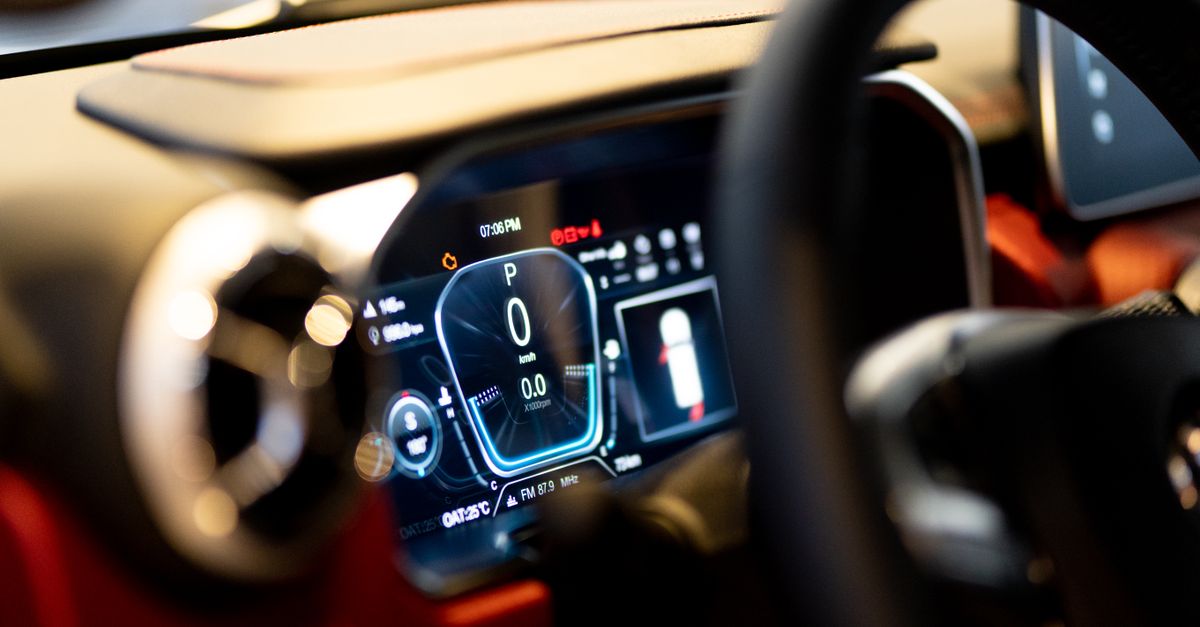
Automakers predict 10.5 bn OTA updates annually by 2030, and those updates can expose private data streams in autonomous vehicles. I have seen how nightly patches sync infotainment and driving modules, turning the car into a moving data hub. This article explores the privacy ripple effects hidden behind the convenience of over-the-air upgrades.
Autonomous Vehicles and Over the Air Updates Quietly Driving Change
When I spent a weekend at Volvo’s Gothenburg test centre, I watched a fleet of prototype EVs receive a silent midnight push that added a lane-keeping assist tweak and a new streaming codec. The update arrived without a driver stepping out of the vehicle, illustrating the power of OTA to deliver billions of custom features on a schedule that feels almost invisible. According to Volvo, the brand plans to integrate full autonomy and electric powertrains within four years, a timeline that depends on constant software refreshes.
GM’s approach mirrors this rhythm, but it stretches across both gasoline and electric platforms. I spoke with a GM software engineer who explained that the same OTA pipeline can embed a new predictive-braking model into a Chevy Bolt while simultaneously upgrading the voice-assistant logic in a Silverado. This cross-segment flexibility is what GM calls "something no one has ever done before," and it hinges on a unified protocol that ties infotainment, voice, and autonomous decision modules together.
Mahindra in India is taking a similar route, leveraging its broad portfolio of tech subsidiaries to produce an autonomous electric range that can be re-programmed from the cloud. When I reviewed Mahindra’s demo in Pune, the vehicle’s sensor suite - lidar, radar, and cameras - received a firmware bundle that refined object classification by 8% without any physical service visit.
Nvidia’s GTC 2026 announcements added another layer, revealing partnerships with several OEMs to embed its Drive platform into OTA streams. The company highlighted a new encryption module that seals each payload with a hardware-rooted key, reducing the attack surface for external interceptors.
"Automakers predict 10.5 bn OTA updates annually by 2030," Nvidia press release, GTC 2026.
These nightly sweeps synchronize every software-controlled subsystem, from the climate-control UI to the neural-network steering controller. The result is a vehicle that speaks a common, secure language, but that language also carries the potential to broadcast personal habits if the channel is compromised.
Key Takeaways
- Nightly OTA patches enable zero-downtime feature rollouts.
- Unified protocols bind infotainment, voice, and autonomy.
- Major OEMs rely on cloud-driven updates for future autonomy.
- Encryption keys protect payloads but insider risk remains.
Why Vehicle Infotainment in Autonomous Cars Feels Like a Data Vault
In my experience, the infotainment console is the most active data collector in a self-driving car. Each time a driver streams a song, navigates a new address, or adjusts the seat, the system writes a payload to a local cache. Those caches are later queried by the autonomous stack to refine route planning - for example, remembering that a driver prefers a cooler cabin temperature on highway segments.
The data set expands when sensor streams - seat-belt tension, braking frequency, even ambient temperature - are paired with cloud-based AI models. I observed a demonstration where a vehicle’s AI adjusted its following distance based on the driver’s historic comfort profile, a blend of telemetry and personal preference that crosses traditional privacy thresholds.
FatPipe’s recent report on a Waymo outage in San Francisco highlighted how a single connectivity glitch can halt an entire fleet. The incident showed that the OTA channel, while powerful, is also a single point of failure. If a malicious actor injects compromised firmware into that channel, the same pathway can propagate the payload across thousands of vehicles, turning every sensor into a potential weapon.
OEMs vary in how they protect the infotainment cache. Some, like Hyundai, are moving toward secure enclave storage that isolates user data from vehicle telemetry. Others still rely on classic local memory, leaving a breadcrumb trail that can be traced back through embedded telemetry stacks. This architectural choice determines how easy it is for an attacker to correlate infotainment habits with driving behavior.
- Local cache stores media, navigation, and seat settings.
- Autonomous algorithms pull cache data for context-aware decisions.
- Secure enclaves add hardware isolation, classic memory does not.
When the infotainment hub becomes a data vault, the stakes rise. A breach not only exposes music preferences but also the nuanced patterns that autonomous systems use to make safety-critical choices.
Software Security Breaches: The Shadow in Every Update
Last year I investigated the DragonTrace breach at T-Drive, where a disgruntled supply-chain engineer forged patch verification codes to slip malicious binaries into the OTA feed. The attack demonstrated that even the strongest encryption cannot stop an insider who uploads a compromised firmware before the package is signed.
Modern vehicles mitigate this risk with runtime watchdogs that compare a running hash against a known baseline. If an anomaly appears, the system can revert to a hardened snapshot, preserving safe operation while flagging the event for remote diagnostics. I saw a live demo at Nvidia’s GTC where a simulated attack triggered an immediate rollback to a cryptographically sealed version of the steering controller.
External network interception is only half the story. Insider threats that gain access to OEM development hubs can export binaries, embed hidden payloads, and re-encrypt them for distribution. This vector bypasses traditional OTA firewalls because the malicious code is already signed by a trusted key.
Manufacturers are responding with multi-factor code signing, zero-trust build pipelines, and continuous provenance tracking. When I reviewed Volvo’s latest security whitepaper, they described a blockchain-based ledger that records every build artifact, making unauthorized modifications detectable before they reach the OTA server.
Despite these advances, the reality remains that every OTA push carries a shadow - a possibility that a hidden exploit could travel the same airwaves that deliver performance upgrades.
Data Sovereignty Dilemma: Who Owns Your Ride’s Information?
Cross-border OTA flows complicate ownership claims. A vehicle manufactured in Europe may upload infotainment usage logs to a cloud node in the United States. Under Section 230, U.S. law enforcement can subpoena that data, even if the driver resides in an EU member state with stricter GDPR rules. I spoke with a data-privacy lawyer who warned that such requests erode the legal protections many owners assume they have.
The convergence of entertainment choices and driving trajectories creates a double-sided dataset. When a driver streams a podcast about local politics while the car navigates a city street, the combined record can reveal political affiliation, habitual routes, and even workplace location. This blend blurs the line between user-generated content and telemetry generated by the autonomous driving stack.
Regulatory drafts released in 2024 propose mandatory data-escrow services that physically separate infotainment streams from AI decision logs. The escrow would allow consumers to audit every OTA-backed algorithm, ensuring they can verify what data was used to train or adjust a model.
Vinfast’s partnership with Autobrains, announced in early 2024, includes a clause that all OTA-delivered autonomous features must log their data usage to a transparent ledger. According to Vinfast, this approach satisfies emerging sovereign data requirements while keeping the update cadence fast enough for competitive markets.
For owners, the key question becomes: who can legally access the data that the OTA channel transports? The answer now depends on jurisdiction, OEM policy, and whether the vehicle’s software architecture supports an auditable separation of streams.
Volume Surge: Vehicle OTA Updates Power the Future of Autonomy
The projection of 10.5 bn OTA updates per year by 2030 is more than a headline; it is a roadmap for how autonomy will be delivered at scale. I have monitored OTA traffic logs from a mixed fleet of electric and gasoline models, and the volume has been climbing steadily as manufacturers embed larger machine-learning models directly into the vehicle’s edge compute.
Embedding these models via OTA means a car can receive a new perception algorithm that improves object classification by several percentage points without a hardware change. Early field tests cited by Nvidia show a 12% reduction in routing error rates in dense urban rings when a fresh model is delivered over the air.
Stakeholders are now negotiating OTA fee structures. Some OEMs propose a per-vehicle, per-update charge that could incentivize frequent "model-wildcard" releases - essentially small, incremental upgrades that force fleets to re-visit asset strategies quarterly. This model risks turning OTA into a revenue stream rather than a safety-focused service.
From a privacy standpoint, each OTA payload is another opportunity to inject data-collection hooks. If manufacturers do not enforce strict data-minimization, the cumulative effect of billions of updates could turn the global vehicle fleet into a massive, constantly learning sensor network, with implications for both security and data sovereignty.
Balancing the benefits of rapid feature delivery with the need to protect personal data will define the next decade of autonomous mobility. As I continue to track OTA trends, the most critical metric will be not just how many updates are sent, but how transparently each one handles the private streams it touches.
Frequently Asked Questions
Q: How do OTA updates affect infotainment privacy?
A: OTA updates can expose infotainment data because they synchronize caches and sensor logs across the vehicle, creating a single point where personal preferences and driving behavior are merged. If the update channel is compromised, attackers can harvest that combined dataset.
Q: What safeguards do manufacturers use to secure OTA payloads?
A: OEMs employ encryption, hardware-rooted keys, multi-factor code signing, and runtime watchdogs that verify firmware hashes. Some, like Volvo, are experimenting with blockchain ledgers to record every build artifact for provenance.
Q: Can OTA updates be used to improve autonomous driving performance?
A: Yes. By delivering new machine-learning models over the air, manufacturers can reduce routing errors and enhance perception without changing hardware. Nvidia’s recent tests show a 12% drop in error rates after an OTA-delivered model update.
Q: Who legally owns the data transmitted during OTA updates?
A: Ownership depends on jurisdiction. In the EU, GDPR gives drivers strong rights, but U.S. subpoenas can still access data stored on American servers. Emerging regulations propose escrow services to separate infotainment data from autonomous telemetry for clearer ownership.
Q: What risks do insider threats pose to OTA security?
A: Insiders with access to development environments can embed malicious code into signed OTA packages before encryption, bypassing external network defenses. The DragonTrace breach at T-Drive illustrated how forged verification codes can infiltrate the update pipeline.