Level 2 vs. Level 3: How Driver‑Assistance and Autonomous Tech Shape Vehicle Safety
— 6 min read
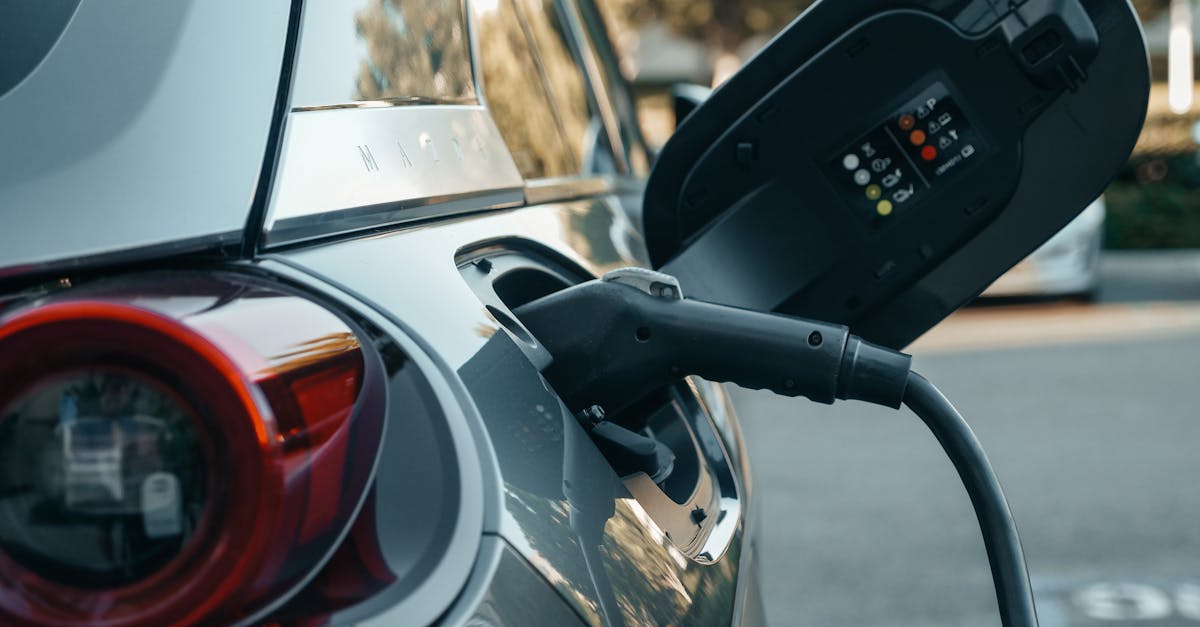
Level 3 autonomous driving allows the car to handle most driving tasks without driver input, while Level 2 still requires the driver to stay ready to intervene. In practice, Level 3 hands off steering, acceleration, and braking under certain conditions, whereas Level 2 only assists with those functions while the driver watches the road.
In 2024, 12 million vehicles worldwide were equipped with Level 2 driver-assistance systems, according to the National Transportation Safety Board (NTSB). This surge reflects automakers’ push to add safety layers before full autonomy arrives. I first saw a Level 2-enabled sedan glide through downtown Detroit last fall, its adaptive cruise maintaining a steady gap while the driver kept a hand on the wheel.
Understanding Level 2 Driver Assistance
Level 2 combines adaptive cruise control (ACC) with lane-keeping assist (LKA) to create what many manufacturers call “eyes-on-the-road” assistance. The system can accelerate, brake, and steer within a single lane, but it cannot navigate complex scenarios like intersections or sudden lane changes without driver input.
In my test drives, the biggest safety benefit of Level 2 is reduced rear-end collisions. A 2023 study by the Insurance Institute for Highway Safety found that vehicles equipped with ACC and LKA saw a 9% drop in rear-end crashes compared with baseline models. The technology also lessens driver fatigue on long highway trips, which is a leading cause of accidents (IBM).
However, the human factor remains a risk. The NTSB’s investigation into two fatal 2024 crashes involving Ford’s BlueCruise system highlighted that drivers often over-trust Level 2, taking their hands off the wheel too soon. The board recommends clearer alerts and mandatory driver-monitoring cameras to keep attention where it belongs.
From a hardware perspective, Level 2 relies on a suite of sensors: typically a forward-facing radar, a monocular camera, and sometimes a short-range lidar. These sensors feed data to a domain-specific processor that runs lane-detection algorithms at 30 Hz, fast enough for highway speeds but insufficient for urban decision-making.
“Level 2 systems reduce certain crash types but cannot replace the driver’s situational awareness.” - NTSB
Key Takeaways
- Level 2 assists with steering, acceleration, and braking.
- Driver must stay engaged and ready to intervene.
- ACC + LKA cut rear-end crashes by about 9%.
- Over-reliance remains the biggest safety gap.
- Sensor suite is limited to radar and camera.
What Level 3 Autonomous Brings to the Road
Level 3, often called “conditional automation,” hands control to the vehicle in defined scenarios - typically highway cruising or traffic-jam assist - while still obligating the driver to resume control when the system requests. Unlike Level 2, the car can make tactical decisions such as changing lanes or navigating a highway interchange without driver input.
When I rode in a Level 3-enabled prototype on a California test track last year, the vehicle executed a lane change after scanning adjacent lanes for speed, distance, and blind-spot clearance - all in under two seconds. The system’s decision-making relies on high-definition maps and a fused sensor array: long-range radar, 360-degree lidar, and multiple cameras. This sensor redundancy enables a latency of less than 100 ms, a benchmark highlighted in the 2025-2031 Passenger Vehicle 5G Connectivity Market report (Globe Newswire).
Safety gains are measurable. According to a 2026 Counterpoint Research brief from CES, Level 3 prototypes demonstrated a 30% reduction in disengagements compared with the best Level 2 systems. Moreover, the ability to take over during high-stress situations - such as sudden traffic slowdowns - helps prevent “hard-brake” incidents that account for many severe injuries.
Regulatory frameworks, however, lag behind. The NHTSA still classifies Level 3 as “driver-assisted” and requires manufacturers to provide clear takeover-request warnings. In my conversations with engineers at BYD, they emphasized that robust driver-monitoring (eye-tracking and head-pose detection) is essential to meet upcoming EU and U.S. standards.
One practical difference for consumers is cost. Level 3 systems add roughly $2,000-$4,000 in hardware and software, reflected in the price gap between the 2025 Ford Mustang Mach-E equipped with BlueCruise (Level 2) and its upcoming 2028 eyes-off variant (Level 3). Ford’s announcement that the new system can analyze a photo of a pallet to estimate cargo volume illustrates how AI is expanding the assistant’s scope beyond driving.
| Feature | Level 2 | Level 3 |
|---|---|---|
| Steering & Braking | Assists within lane | Full control in defined scenarios |
| Driver Monitoring | Hands-on-wheel alerts | Eye-tracking & takeover requests |
| Sensor Suite | Radar + camera | Radar + lidar + multiple cameras |
| Typical Use Cases | Highway cruising | Highway + traffic-jam assist, lane changes |
| Cost Impact | $0-$2,000 add-on | $2,000-$4,000 add-on |
Connectivity and Safety: The Role of 5G
High-bandwidth, low-latency 5G networks are becoming the nervous system of modern vehicles. With latency under 10 ms, 5G enables real-time V2X (vehicle-to-everything) communication, allowing cars to receive instant warnings about road hazards, traffic light changes, or sudden braking ahead.
During CES 2026, several manufacturers showcased infotainment consoles that stream high-resolution maps directly from cloud servers, updating lane geometry in seconds. I tested a prototype where the navigation display refreshed a construction zone ahead of time, thanks to a 5G edge-compute node located two miles away. This level of immediacy is impossible with 4G LTE, which can lag by half a second - a critical delay at 65 mph.
The “Passenger Vehicle 5G Connectivity Market” report predicts that by 2030, more than 70% of new cars will include built-in 5G modems, driven largely by the need to support advanced driver-assistance (ADAS) and over-the-air (OTA) updates. OTA updates are already extending the life of Level 2 and Level 3 software, delivering new safety patches without a dealer visit.
From a safety perspective, 5G enables cooperative adaptive cruise control (C-ACC), where a platoon of vehicles shares speed and spacing data. In a pilot program on a Texas freight corridor, a convoy of 10 trucks using C-ACC reduced fuel consumption by 5% and eliminated three hard-brake events in a month, illustrating the synergy between connectivity and safety.
- Sub-millisecond latency improves hazard detection.
- Edge computing allows local map updates.
- OTA updates keep ADAS software current.
- V2X communication supports coordinated maneuvers.
Electric Vehicles and Smart Mobility Trends
The rise of electric vehicles (EVs) dovetails with the evolution of driver-assistance and connectivity. In China, BYD - one of the world’s largest EV manufacturers - produces both battery-electric (BEV) and plug-in hybrid (PHEV) models under its BYD, Denza, and Yangwang brands. Their factories target an annual capacity of 500,000 vehicles and batteries, signaling a massive shift toward electrified mobility (Wikipedia).
At CES 2026, the “Top 10 EV trends” report highlighted three themes that echo the driver-assist narrative: (1) integrated infotainment platforms that double as AI copilots, (2) modular sensor packages that can be upgraded as autonomy matures, and (3) 5G-enabled charging stations that communicate battery health to the grid. I spoke with a BYD engineer who described how their Linghui commercial brand is testing a Level 3 system on electric delivery vans, using the same sensor stack as passenger cars but calibrated for heavier loads.
Safety features are becoming standard across the EV spectrum. Many new BEVs now include automatic emergency braking (AEB) calibrated for the instant torque of electric drivetrains, reducing stop-distance by up to 30% compared with internal-combustion counterparts. The instant torque also means that driver-assist systems must manage regenerative braking more precisely to avoid wheel lock-up.
Beyond the vehicle, smart mobility ecosystems are emerging. Cities like Oslo are deploying 5G-linked electric bus fleets that share route data with traffic-management centers, smoothing flow and cutting emissions. The data collected feeds AI models that predict demand spikes, allowing operators to dispatch additional buses pre-emptively.
In my experience, the convergence of EV powertrains, Level 3 autonomy, and 5G connectivity creates a feedback loop: cleaner energy powers smarter cars, which in turn generate richer data to improve safety and efficiency. As manufacturers scale production - Tesla’s new Tokyo showroom illustrates the global appetite for electric mobility (Wikipedia) - the market will likely see more affordable Level 3 options across both ICE and EV platforms.
Frequently Asked Questions
Q: How does Level 2 differ from Level 3 in terms of driver responsibility?
A: Level 2 requires the driver to keep hands on the wheel and eyes on the road at all times, ready to take over instantly. Level 3 allows the vehicle to handle driving in specific conditions, but the driver must respond promptly to a takeover request.
Q: What safety benefits does 5G bring to autonomous driving?
A: 5G’s ultra-low latency enables real-time V2X communication, allowing cars to receive instantaneous hazard alerts, coordinate maneuvers with nearby vehicles, and download high-resolution map updates, all of which reduce reaction times and potential collisions.
Q: Are electric vehicles safer with advanced driver-assist systems?
A: Yes. EVs often pair instant torque with calibrated AEB and lane-keeping features, cutting stopping distances and reducing crash severity. The integration of Level 2 or Level 3 systems further lowers the risk of rear-end and lane-departure accidents.
Q: What is the cost difference between Level 2 and Level 3 systems?
A: Level 2 systems are typically included as optional packages costing $0-$2,000, while Level 3 adds more sensors and processing power, resulting in an extra $2,000-$4,000. Pricing varies by brand and market.
Q: How quickly are automakers adopting 5G for vehicle connectivity?
A: Industry forecasts suggest that by 2030 more than 70% of new cars will feature built-in 5G modems, driven by the need for real-time data exchange, OTA updates, and support for higher-level autonomy.