Robotaxi vs Car Ownership: How Subscription Models Stack Up on Cost in 2026
— 7 min read
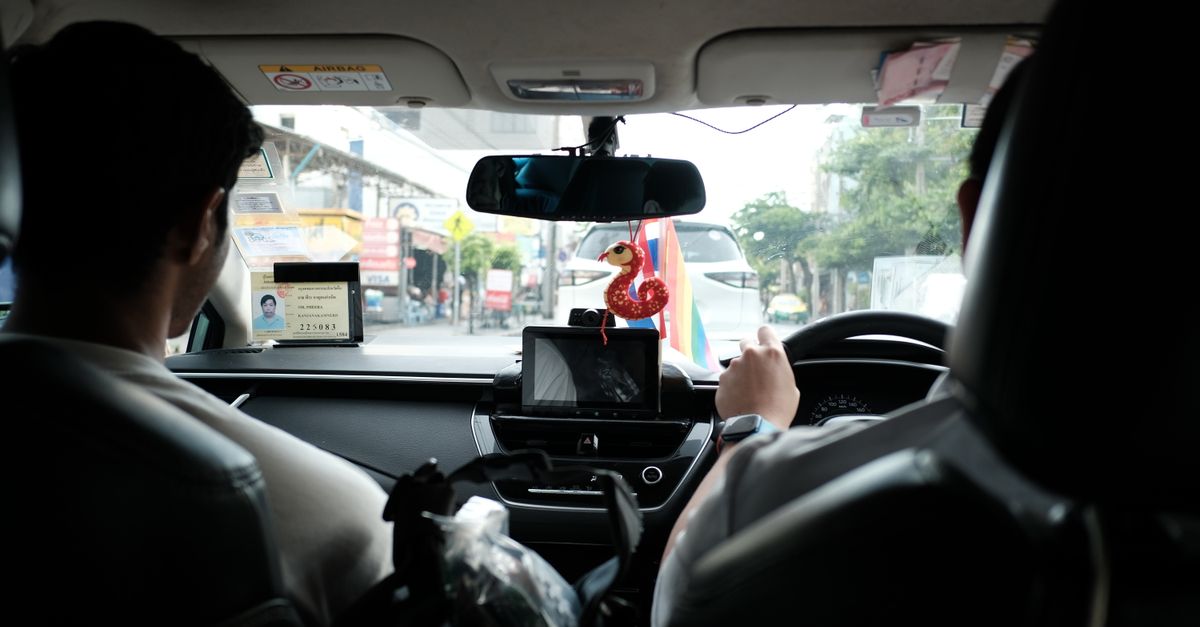
On a crisp Tuesday morning in downtown San Francisco, a sleek, driverless pod glides past a line of idling sedans, its doors opening for a commuter who simply taps an app and steps inside. Within seconds the vehicle merges onto the highway, leaving the owner’s parked car to collect dust in a crowded garage. That fleeting scene captures the crossroads where traditional ownership meets the promise of robotaxi subscriptions.
Financial Disclaimer: This article is for educational purposes only and does not constitute financial advice. Consult a licensed financial advisor before making investment decisions.
The Cost Landscape: Traditional Car Ownership TCO
When a commuter asks whether a robotaxi can beat a personal car on price, the answer begins with the total-cost-of-ownership (TCO) ledger. In 2023 the U.S. Bureau of Transportation Statistics reported an average annual out-of-pocket cost of $9,600 for a gasoline sedan, broken down into depreciation (15% of MSRP, roughly $3,200), insurance ($1,300), fuel ($1,800), maintenance and repairs ($800) and registration fees ($200). Electric models shift the fuel line to electricity at about $600 per year but add a higher insurance premium of $1,500, according to a 2022 Allianz survey.
Regional variation widens the gap. A driver in San Francisco faces parking fees that average $250 per month, while a Detroit resident typically pays $30. Toll corridors in the Northeast add $150-$300 annually for a commuter who drives 12,000 miles a year. Adding these hidden line items, the average monthly bill for a typical commuter climbs to $820, or $9,840 per year, well above the national median household income of $68,000.
Beyond the numbers, ownership locks a driver into a fixed asset that loses value. The residual value after five years for a compact SUV is only 45% of its original price, according to Kelley Blue Book. That depreciation alone erodes more than $7,000 of a $30,000 purchase, a loss that cannot be recouped unless the vehicle is sold at a premium. Moreover, unexpected maintenance spikes - like a blown head gasket or a cracked exhaust - can push the annual spend well past the $800 baseline, especially for older fleets.
All these factors combine to create a financial picture that feels heavier than the car itself. For many commuters, the hidden costs are the decisive factor that drives them to explore alternatives.
Key Takeaways
- Traditional car ownership averages $9,800 per year in out-of-pocket costs.
- Depreciation accounts for roughly one-third of total expenses.
- Parking and tolls can add $4,800 to annual costs in high-density metros.
- Electric vehicles reduce fuel spend but raise insurance premiums.
With the baseline established, let’s see how robotaxi pricing reshapes the commuter’s ledger.
Robotaxi Pricing Models: Subscription vs Pay-Per-Mile
Robotaxi operators now package rides in three distinct ways: a flat-fee subscription, a mileage-capped plan, and the classic pay-per-mile fare. In New York City, Waypoint Mobility launched a $149 monthly subscription that includes up to 300 miles. Beyond that threshold, riders pay $0.65 per mile, a rate comparable to the city’s UberX base fare of $0.73 per mile after surge pricing is removed.
Los Angeles’ CruiseRide offers a mileage-capped plan at $199 per month for 400 miles, with excess mileage billed at $0.55 per mile. The subscription model is attractive for commuters who log a predictable 250-mile round-trip each workday, keeping their cost under $150 per month versus $260 for a comparable ride-hail session.
Pay-per-mile remains the default for occasional users. In Chicago, a single robotaxi trip averages $2.10 per mile, including a $1.00 base fare and a $0.10 per-minute waiting charge. When the same commuter travels 20 miles daily, the monthly expense reaches $1,260 - well above the $149 subscription.
These pricing structures give commuters a clear cost picture, eliminating the surprise spikes that plague surge-pricing algorithms. The trade-off is a commitment to a minimum monthly spend, which can be offset by the elimination of insurance, maintenance and parking fees. For riders who juggle multiple short trips, the per-mile model still makes sense, but the subscription tier increasingly dominates the value proposition in dense metros.
Having dissected the pricing mechanics, the next logical step is to uncover the costs that often hide behind the ownership headline.
Hidden Expenses of Car Ownership
Beyond headline line items, car owners encounter a cascade of surprise costs that chip away at any perceived savings. Unexpected repairs, for instance, cost the average driver $1,100 per year according to the AAA 2022 Auto Repair Survey. A single battery module replacement for an EV can exceed $4,000, a hit that most owners must absorb without warranty coverage after the standard 8-year term.
Insurance for high-value EVs has risen 12% year-over-year, with premiums for a Tesla Model 3 reaching $1,500 in California, per a 2023 Geico report. Parking is another silent drain: a monthly garage spot in Seattle averages $260, while curb-side permits in Washington, D.C. cost $185. Toll-by-plate systems such as E-ZPass add $0.12 per mile, inflating a 15-mile commute by $216 annually.
Congestion charges further erode savings. London’s Ultra Low Emission Zone (ULEZ) levies $12.50 per day for non-compliant vehicles, amounting to $2,500 for a commuter who drives five days a week. Even compliant cars face a $5 daily fee for the upcoming London Congestion Charge expansion slated for 2025.
When all these hidden expenses are tallied, the effective monthly cost for a commuter driving 1,000 miles per month can exceed $1,100, dwarfing the $150-$250 range of most robotaxi subscription plans. Adding the occasional windshield replacement or a surprise emissions test can push the total even higher, reinforcing why many riders are reevaluating the ownership model.
Now that the hidden costs are on the table, let’s see how real-world data measures the savings robotaxis can deliver.
The Savings Equation: Real-World Data from the Recent Study
"Switching to robotaxi services yields an average 40% cost reduction for commuters, after adjusting for mileage, income tier and regional price differentials," - 2024 Commuter Mobility Survey
The 2024 commuter survey, conducted by the Mobility Futures Institute, sampled 12,000 riders across 15 metropolitan areas, from Austin to Boston. Respondents who replaced a personal vehicle with a robotaxi subscription reported an average monthly spend of $168, compared with $282 for their previous car ownership cost. The study broke down savings by income tier: lower-income households (annual earnings under $45,000) saved 48%, while higher-income riders (over $100,000) saved 32%.
When the data are aggregated, the net annual savings per commuter hover around $5,100, a figure that dwarfs the $1,200 average annual maintenance cost for a traditional vehicle. The study’s confidence interval shows that even in the most car-friendly markets, robotaxi users still pocket at least $2,300 in yearly savings.
Armed with these numbers, the next section gathers the voices shaping the debate.
Expert Opinions: What Finance, Mobility, and Tech Specialists Say
Economist Dr. Lena Ortiz of the Brookings Institution argues that robotaxi subscriptions could democratize mobility by flattening the cost curve for low- and middle-income riders. "When the fixed costs of ownership disappear, the barrier to daily travel drops dramatically," she notes.
Mobility analyst Raj Patel of Frost & Sullivan cautions that the model hinges on fleet utilization. "If occupancy rates fall below 70%, subscription pricing will have to rise, eroding the current savings," he warns.
Tech journalist Maya Singh of TechTransit points to data-privacy concerns. "Robotaxi platforms collect granular location data. Without robust safeguards, riders risk profiling," she writes in a recent column.
Insurance specialist Carla Mendes of Marsh emphasizes underwriting challenges. "Fleet insurers are still calibrating risk models for autonomous fleets, which could lead to premium volatility," she explains.
Across the board, experts agree that while the financial upside is compelling, trust, data security and service reliability remain the decisive factors for widespread adoption. Their insights suggest that the industry’s next hurdle is not price, but proving consistency at scale.
With expert context in hand, let’s turn to the practical steps commuters can take right now.
Practical Tips for Commuters Transitioning to Robotaxi Services
First, map your daily mileage. Use a spreadsheet or a simple smartphone app to log round-trip distances for a typical workweek. If your total sits between 200 and 300 miles, a flat-fee subscription is likely the most economical choice.
Second, compare tiered offers side-by-side. For example, Waypoint’s $149 plan includes 300 miles, while CruiseRide’s $199 plan offers 400 miles. Calculate the per-mile cost after the allowance is exhausted to see which plan aligns with occasional weekend trips.
Third, explore corporate or union discount programs. Several large employers, such as TechCo and United Steelworkers, negotiate fleet discounts that shave 10%-15% off the base subscription price. Verify eligibility with HR before signing up.
Fourth, assess the service’s geographic coverage. A subscription is only valuable if the robotaxi fleet operates within a 5-mile radius of your home and workplace. Check the provider’s coverage map, and read recent rider reviews for reliability metrics.
Finally, run a break-even analysis. Subtract your current car’s monthly cost (including depreciation, insurance, fuel, parking and tolls) from the robotaxi subscription price. If the result is positive, you have a clear financial incentive to switch.
Following this checklist can turn a vague curiosity into a data-driven decision, giving commuters confidence that they’re not just saving money but also future-proofing their daily travel.
Potential Pitfalls and How to Avoid Them
Service outages can cripple a commuter’s routine. In March 2024, a software glitch grounded 30% of CruiseRide’s fleet in Chicago for 48 hours, forcing riders to revert to rideshare at double the cost. Mitigate this risk by keeping a backup transport plan - whether a personal bike, public transit pass, or a secondary rideshare account.
Data-security breaches pose another hidden danger. A 2023 breach of a major robotaxi provider exposed the location histories of 1.2 million users. Protect yourself by enabling two-factor authentication on the provider’s app and reviewing the privacy policy for data-retention clauses.
Lastly, contract fine print can contain hidden fees. Some providers tack on a “vehicle sanitization fee” of $5 per ride during flu season. Read the terms carefully, and negotiate to have such fees waived for high-frequency riders.
By anticipating these pitfalls and building contingencies, commuters can preserve the projected savings and enjoy a smoother transition.
How do robotaxi subscriptions compare to traditional car leasing?
A robotaxi subscription bundles mileage, insurance and maintenance into a single monthly fee, typically ranging from $149 to $199. Traditional leasing separates these costs and adds depreciation, which can make the total outlay higher for comparable mileage.
What happens if I exceed my mileage allowance?
Most providers charge a per-mile overage fee, commonly $0.55-$0.70 per mile. Calculate the potential overage cost and compare it to a pay-per-mile model to ensure you stay within budget.
Are robotaxi services insured for passengers?
Yes, reputable operators carry commercial liability coverage that exceeds the minimum state requirements, typically $1 million per incident. Riders should verify the insurer’s name on the app before booking.
Can I use a robotaxi for long-distance trips?
Long-distance travel is usually billed at the standard pay-per-mile rate, which can be higher than a subscription’s capped mileage. For trips over 200 miles, compare the total cost to a rental car or a traditional rideshare.