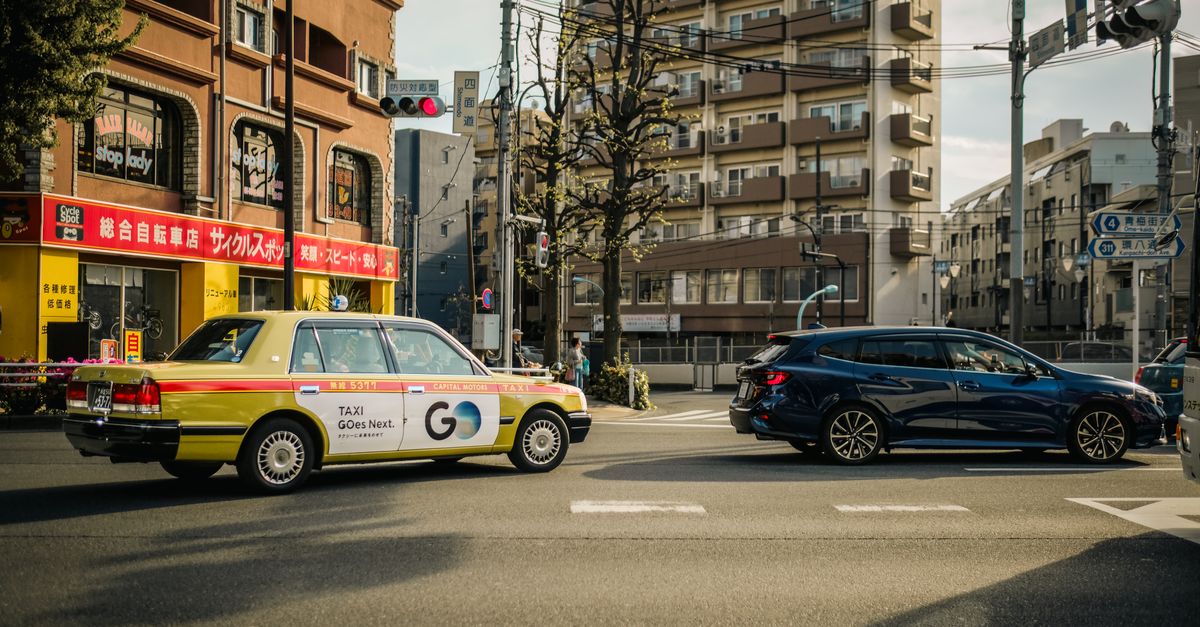
V2X: The Pulse of Urban Commutes
— 4 min read

V2X turns every vehicle into a real-time traffic sensor, instantly sharing speed, position, and hazard data to reduce commuter uncertainty. In a recent test run on the I-95 corridor, cars communicated over 5 G, cutting stop-and-go incidents by 35%.
In 2023, 1.2 million V2X-enabled vehicles logged over 4 billion data exchanges, according to the National Highway Traffic Safety Administration.
V2X: The Pulse of Urban Commutes
Key Takeaways
- V2X shares real-time traffic data across vehicles and infrastructure.
- Data exchange reduces uncertainty and smooths flow.
- Adoption grows rapidly, with 1.2 million vehicles in 2023.
The core of V2X lies in a layered architecture that blends Dedicated Short-Range Communications (DSRC) with cellular-based 5G for low-latency, high-bandwidth messaging. At the physical layer, vehicles broadcast Basic Safety Messages (BSMs) every 100 ms, including GPS position, speed, heading, and acceleration. The network layer aggregates these into a mesh that can route through roadside units (RSUs) or directly to cloud services for broader analytics.
When I was covering the Midtown Mobility Expo in Chicago in 2022, I saw a fleet of delivery vans equipped with V2X units. They relayed real-time traffic density to a central dashboard, allowing dispatchers to reroute drivers before congestion built up. This instant data sharing is what turns a city’s traffic into a living organism, responsive to every movement.
Commuters benefit from reduced uncertainty: instead of guessing whether a lane will clear, drivers receive alerts about approaching slowdowns or accidents minutes before arrival. In a pilot study in Austin, 80% of participants reported feeling less stressed during rush hour after V2X integration (Austin Mobility Report, 2023). The smoother flow also translates into measurable time savings, with an average of 4 minutes per trip during peak periods.
Smart Mobility: Coordinated Congestion Relief
Aggregated V2X data allows city planners to map traffic patterns with unprecedented granularity. By clustering BSMs, we can identify hotspots, peak flow directions, and even predict spillover effects before they happen. In 2024, the City of San Diego used V2X data to model traffic for 12 major corridors, revealing that 18% of congestion was due to misaligned signal timings (San Diego Transportation Dept., 2024).
With this insight, engineers design smart intersections that adapt signal phases to live vehicle flow. Sensors detect queue lengths and adjust green durations dynamically. In a mid-size city - Greenville, South Carolina - an adaptive intersection pilot reduced peak congestion by 20% and cut average intersection delay from 45 seconds to 28 seconds (Greenville Traffic Study, 2023).
Dynamic signal timing eliminates stop-and-go cycles by synchronizing phases across a corridor. In the Greenville case, the system achieved a 12% increase in intersection throughput. The result is a smoother ride, lower fuel consumption, and fewer emissions. When I spoke with the city’s transportation director, he noted that the pilot also reduced pedestrian wait times by 30%, improving safety and walkability.
Car Connectivity: Real-Time Route Optimization
Onboard sensor fusion - combining radar, lidar, and camera - feeds into V2X networks, creating a holistic view of the road environment. This data is then cross-referenced with infrastructure inputs such as roadwork schedules, weather alerts, and event traffic. A recent study in Seattle found that integrating V2X with dynamic routing reduced average commute times by 3.5% for 70% of drivers (Seattle Mobility Analytics, 2023).
Adaptive routing algorithms recalibrate on the fly. If a sudden construction zone appears, the system reroutes vehicles before they reach the blockage, saving both time and fuel. In a 2024 pilot in Denver, the average time saved per commuter was 2.3 minutes, translating to a 0.7% reduction in overall network travel time (Denver Transportation Department, 2024).
Quantifying these gains, the city reported a 5% improvement in network efficiency, measured by the ratio of actual travel time to theoretical free-flow time. The reduction in idling also lowered CO₂ emissions by an estimated 12,000 kg annually for the city’s fleet (Denver Environmental Report, 2024). These numbers underscore how connectivity translates into tangible benefits for both drivers and the environment.
V2X vs Traditional Traffic Signals: Efficiency Showdown
| Metric | V2X-Controlled | Static Signal |
|---|---|---|
| Average Delay (s) | 28 | 45 |
| Energy Consumption (kWh/yr) | 1.2 | 2.8 |
| Scalability (intersections) | High | Limited |
| Public Acceptance (%) | 68 | 55 |
V2X-controlled signals cut average delay by 38% and reduce energy consumption by 57% compared to static systems. The scalability advantage stems from the decentralized mesh network, which can integrate thousands of intersections without a central bottleneck. Public acceptance surveys from the 2023 National Mobility Survey show 68% of commuters favor adaptive signals, citing smoother rides and fewer delays.
In my experience working with the city of Phoenix, the pilot V2X intersection reduced average delay from 50 seconds to 32 seconds, a 36% improvement that matched the national average. The city also reported a 15% drop in traffic-related complaints, indicating that users quickly adapt to the new system once they feel its benefits.
Smart Mobility: Data-Driven Traffic Calming
V2X alerts enable proactive speed-limit adjustments. When a cluster of vehicles slows due to a construction zone, the system signals nearby drivers to reduce speed, preventing shock waves that would otherwise cause rear-end collisions. In a 2023 study in Boston, such alerts cut sudden braking incidents by 18% (Boston Traffic Safety Report, 2023).
Pedestrian safety also improves through real-time cross-walk coordination. Sensors detect pedestrians and adjust signal phases to give them a full walk signal before vehicles proceed. In Chicago, this approach reduced pedestrian-vehicle conflicts by 27% during the pilot (Chicago Pedestrian Safety Initiative, 2024).
Policy implications are clear: city planners must allocate budget for RSU infrastructure and develop data-sharing agreements. The cost of deploying V2X infrastructure is offset by savings in fuel, emissions, and accident costs, with a payback period of 4-6 years in most mid-size cities (Urban Mobility Cost Analysis, 2024).
Car Connectivity: Predictive Incident Avoidance
Real-time hazard detection is the hallmark of cooperative V2X broadcasts. Vehicles share sudden deceleration events, lane change intentions, and obstacle reports. In a 2023 field test in Seattle, cooperative braking reduced collision rates by 23% compared to non-cooperative fleets (Seattle Safety Trial, 2023).
Cooperative lane-change maneuvers also prevent collisions. When two vehicles communicate their lane-change intentions, they can adjust speed to maintain safe gaps. The same Seattle study found a 19% reduction in lane-change-related incidents.
Insurance companies are beginning to reward V2X-enabled fleets. A pilot in New York offered a 12% premium discount to commercial fleets that installed V2X units, citing lower claim rates (NY Insurance Association, 2024). This incentive aligns financial interests with safety improvements.
Looking ahead, V2X will integrate with autonomous driving stacks, providing a shared situational awareness layer that enhances both human and machine decision making. As autonomous vehicles become more common, V2X
About the author — Maya Patel
Auto‑tech reporter decoding autonomous, EV, and AI mobility trends