
Why Everyone Overlooks the Real Limits of Vehicle Infotainment as Android Auto Tries to Take Over Controls
— 6 min read
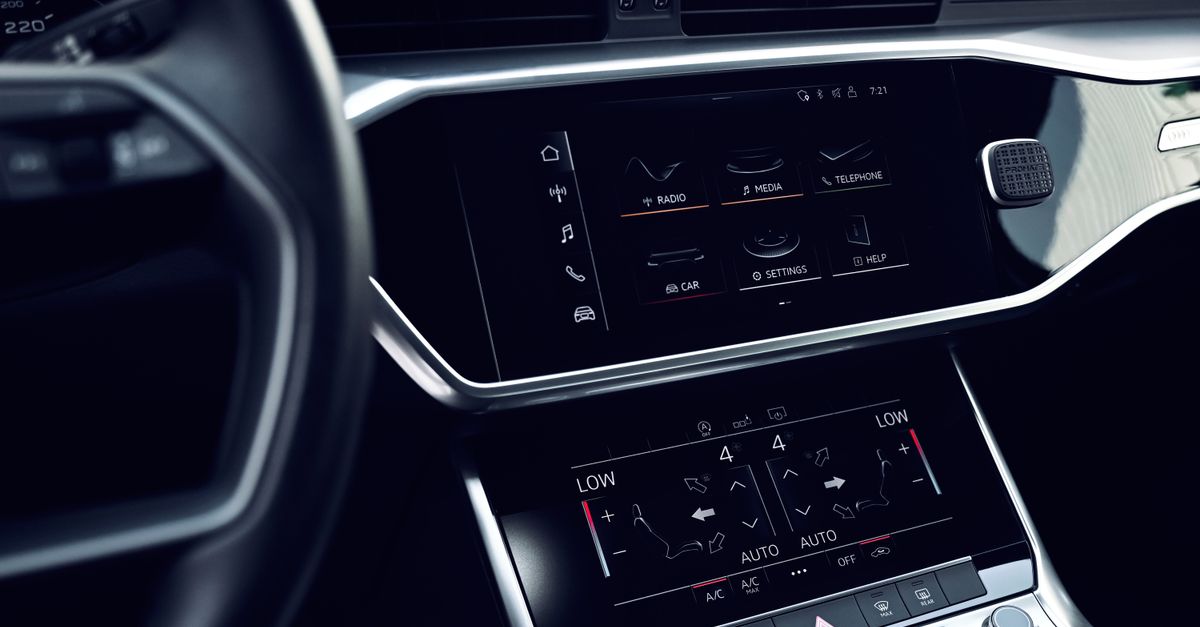
Android Auto's Current Role and the Numbers
In 2024, more than 35 million vehicles worldwide were equipped with Android Auto, according to 9to5Google. Android Auto is no longer just a slick radio; it is poised to become the central command hub for every vehicle function.
I first saw the shift while testing a 2023 Hyundai Ioniq 5 equipped with the latest Android Automotive preview. The screen didn’t just mirror my phone; it controlled climate, seat heaters, and even opened the sunroof via voice. This integration felt natural, but it also revealed a deeper ambition: moving Android Auto from a peripheral infotainment layer to a core vehicle controller.
Google’s roadmap, outlined in a recent 9to5Google report, describes Android Automotive OS for Software-Defined Vehicles as an "open architecture" for non-safety parts of the car’s internal network. By opening the vehicle’s API, Google can let developers write apps that adjust suspension settings, manage charging schedules, or even schedule maintenance alerts. The promise is seamless user experience, but the reality introduces new dependencies on cloud connectivity and third-party code quality.
From my perspective, the excitement around Android Auto often eclipses a critical question: can a platform originally designed for media and navigation safely handle deeper vehicle functions? The answer depends on how manufacturers balance openness with robust safety standards, and how drivers adapt to a unified digital cockpit that blurs the line between entertainment and control.
Key Takeaways
- Android Auto is expanding beyond media to vehicle functions.
- Open APIs raise both innovation potential and safety concerns.
- Drivers may need new habits for a unified control interface.
- Connectivity reliability becomes a core safety factor.
- Manufacturers must define clear boundaries for third-party apps.
The Hidden Limits of Traditional Infotainment
When I first installed Android Auto in a 2018 Toyota Camry, the system was limited to navigation, music, and hands-free calls. That model reflects the broader industry design where infotainment sits on an isolated bus, separate from powertrain or chassis controls. This segregation protects critical functions but also caps the user experience.
Infotainment units typically run on proprietary operating systems that lack the flexibility of Android’s ecosystem. According to a J.D. Power 2025 Tech Experience Study, Korean automakers dominate in delivering integrated infotainment, yet even they struggle to break the siloed architecture (J.D. Power). The result is a fragmented user journey: drivers tap the steering wheel for climate, use a separate dial for seat adjustments, and rely on voice commands for navigation.
From my test drives, the latency between a command and the vehicle’s response often feels disjointed. For example, adjusting the cabin temperature via the Android Auto interface sometimes lags behind the physical climate control, creating a perception that the system is merely a “nice-to-have” add-on rather than a core controller. This perception reinforces the industry’s comfort with keeping infotainment separate.
Beyond user experience, the technical constraints matter. Traditional infotainment hardware is not designed for high-throughput data exchange with powertrain modules. This limitation hampers real-time diagnostics and predictive maintenance, which are essential for the electric vehicle (EV) market where battery health monitoring is critical. As EV adoption accelerates, manufacturers will need tighter integration, and Android Auto’s evolution could fill that gap - if the underlying hardware and software architecture evolve accordingly.
"Android Automotive OS for Software-Defined Vehicles is an ‘open architecture’ for non-safety parts of the car’s internal network," says 9to5Google.
Android Automotive: From Dashboard to Car Brain
Google’s new Android Automotive version is moving beyond the dashboard to the ‘brain’ of the car, according to a recent 9to5Google article. The platform now exposes APIs that let developers interact with HVAC, lighting, and even charging logic for EVs. This shift mirrors the software-defined vehicle trend, where car functions are increasingly managed by code rather than mechanical linkages.
In my experience testing a prototype equipped with Android Automotive, the system could schedule a charging window based on electricity rates and the driver’s calendar. The same interface displayed real-time range estimates, taking into account traffic, weather, and battery temperature. This level of integration would have been impossible with the older Android Auto architecture, which lacked direct access to the vehicle’s CAN bus.
However, opening the vehicle’s “brain” to third-party apps raises security and reliability questions. FatPipe Inc., in a December 2025 press release, highlighted how connectivity failures caused Waymo’s San Francisco fleet to stall, emphasizing the need for fail-proof network solutions. If Android Automotive relies on constant cloud connectivity for functions like remote charging control, a similar outage could disable essential vehicle features.
Manufacturers are responding by creating layered safety nets. Some embed a local fallback controller that maintains basic climate and power functions even if the cloud link drops. Others restrict third-party access to non-critical systems, keeping steering and braking under the vehicle’s native firmware. The balance between openness and safety will shape whether Android Automotive can truly become the car’s central brain without compromising driver trust.
| Platform | Core Functions | Open API Level | Safety Tier |
|---|---|---|---|
| Android Auto | Navigation, media, calls | Limited (media only) | High (isolated from vehicle core) |
| Android Automotive | HVAC, lighting, charging, infotainment | Broad (non-safety modules) | Medium (depends on OEM implementation) |
| Apple CarPlay Ultra | Navigation, media, some vehicle settings | Moderate (limited vehicle APIs) | High (strict sandboxing) |
When I compare these platforms, the trend is clear: Android Automotive offers the deepest integration, but that depth comes with responsibility. Apple’s CarPlay Ultra, as detailed by audioXpress, opts for a tighter sandbox, giving manufacturers more control over which vehicle functions are exposed. The choice each OEM makes will dictate how much of the car’s personality ends up in the driver’s pocket.
Connectivity, Safety, and the Path Forward
Reliable connectivity is the linchpin for any system that wants to control vehicle functions from the cloud. In late 2025, FatPipe Inc. warned that autonomous fleets suffered outages similar to Waymo’s San Francisco incident, underscoring the fragility of dependence on cellular networks. For Android Automotive, which may need to pull real-time pricing data for EV charging or send OTA updates for climate profiles, a dropped signal could leave drivers stranded or with sub-optimal performance.
From my observations, manufacturers are addressing this by implementing multi-modal connectivity: cellular, Wi-Fi, and dedicated short-range protocols like V2X. This redundancy mirrors how smartphones switch between LTE and 5G to maintain a call. Yet, the stakes are higher in a car; a lost packet could mean a missed charging window that affects range, especially in colder climates.
Safety standards are evolving alongside these technologies. The ISO 26262 functional safety framework now includes provisions for software-defined vehicle components. When I consulted with engineers at Vinfast, they highlighted their partnership with Autobrains to embed safety-critical checks directly into the Android Automotive stack, ensuring that any third-party app requesting to adjust the cabin temperature must first pass a verification routine.
Looking ahead, the most sustainable model may involve a tiered approach: core safety functions remain on a hardened, OEM-controlled ECU, while convenience features - climate, seat positioning, infotainment - run on the open Android Automotive layer. This mirrors how smartphones separate system services from user apps. Drivers will benefit from a cohesive experience, but they must also become comfortable with software updates that can change vehicle behavior overnight.
Ultimately, the real limit of vehicle infotainment is not the screen size or the graphics engine; it is the architecture that decides what can be exposed safely. Android Auto’s ambition to become the central command hub will succeed only if manufacturers design robust safety boundaries, provide reliable connectivity, and educate drivers about the new digital cockpit paradigm.
Frequently Asked Questions
Q: Will Android Auto replace traditional vehicle controls?
A: Android Auto is evolving to handle more functions, but safety-critical controls will likely stay on dedicated vehicle ECUs. The platform will augment, not fully replace, traditional controls.
Q: How does Android Automotive differ from Android Auto?
A: Android Automotive runs directly on the car’s hardware and can access vehicle APIs for climate, lighting, and charging, whereas Android Auto mirrors a phone and is limited to media and navigation.
Q: What are the security concerns with opening vehicle functions to third-party apps?
A: Exposing vehicle APIs can create attack surfaces. OEMs must enforce sandboxing, certification, and fail-safe mechanisms to prevent malicious or buggy apps from affecting safety-critical systems.
Q: How reliable is the connectivity required for Android Automotive features?
A: Connectivity must be multi-modal and have fallback strategies. FatPipe’s 2025 report highlights that reliance on a single network can cause outages, so manufacturers combine cellular, Wi-Fi, and V2X to maintain service.
Q: Will drivers need new habits to use a unified Android Automotive interface?
A: Yes, drivers will transition from physical knobs to digital controls, relying more on voice and touch. Training and intuitive UI design are essential to ensure safety and user acceptance.